
Restaurant Inventory Accounting: A Practical Workflow
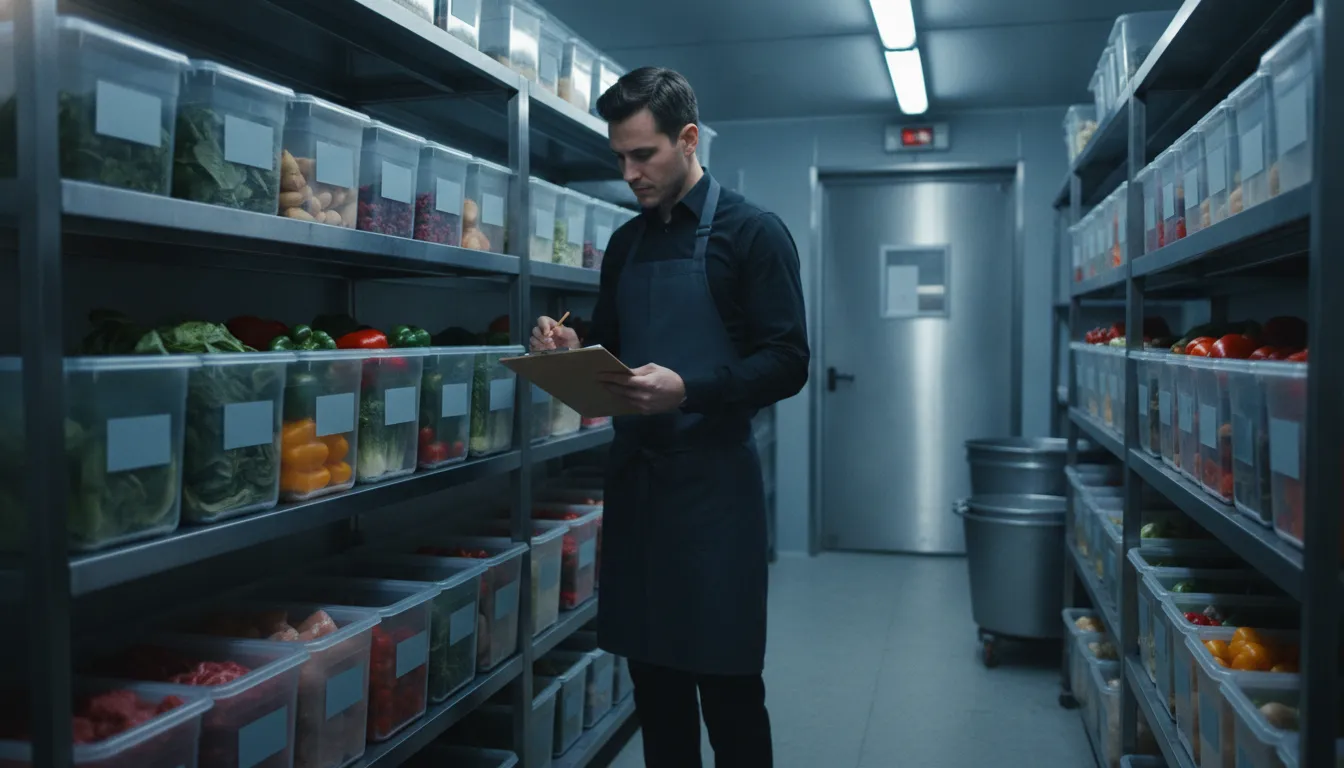
Restaurant inventory accounting turns counts, invoices, and waste into food cost. Use this weekly workflow to catch variances early.
Restaurant inventory accounting is how a count, a stack of invoices, and a waste log become the food cost on your books. Most operators already know the formula. Few run it on a schedule that catches a problem while they can still fix it. A missing case of chicken or a vendor price that jumped last Tuesday does not wait for month-end. It shows up in this week's cost of goods sold if you count and record purchases on purpose.
Book a demo to see weekly food cost from your counts and invoices
This guide walks through the weekly workflow operators and bookkeepers actually use. You will see what to count, how purchases enter the books, and how waste and transfers change the number. You will also see how to read the gap between what you should have used and what you did use. It is an operations workflow, not tax advice. Your CPA still owns the year-end method.
The payoff is simple. You stop guessing whether food cost is high because sales were slow, a vendor raised prices, or product walked out the back door. You can see which of those it was.
What Restaurant Inventory Accounting Covers
Restaurant inventory accounting tracks the food and beverage you buy, store, use, and still have on hand, then turns that movement into cost of goods sold. It is narrower than "restaurant accounting," which also covers labor, sales tax, tips, rent, and the rest of the P&L. It is also different from a software shopping list. The workflow below works on paper, in a spreadsheet, or inside a restaurant system. The tool only matters if the same four inputs land in the same place every week.
Those four inputs are:
- Beginning inventory. What was on the shelf at the start of the period, valued at cost.
- Purchases. What you bought during the period, at the price on the invoice, not the price you hoped to pay.
- Ending inventory. What is still on the shelf when the period closes, counted and valued the same way as the start.
- Known adjustments. Waste, spoilage, employee meals, transfers, and comps you logged on purpose.
Leave one of those out and the food-cost percent lies. A busy week with no count looks like a great food cost because the product is still in the walk-in, not on a plate. A slow week after a big delivery looks terrible for the same reason.
The IRS treats inventory as necessary when buying and selling merchandise is how you make money. And Publication 538 says you value inventory at the start and end of each tax year. That is the legal floor. Operators who only count once a year learn about a bad quarter after the cash is gone. A weekly or period count is an operating choice, not a tax filing. Keep the year-end method your CPA set, and use the shorter count to run the restaurant.
The COGS Formula Operators Actually Use
Cost of goods sold for a period is:
Beginning inventory + purchases − ending inventory = COGS.
Food-cost percent is that COGS divided by food sales for the same period. Use food sales, not total sales, when you want a food number. Mixing in beer, wine, and liquor sales makes food look cheaper than it is and hides a beverage problem at the same time.
Here is a one-week example for a single unit. The numbers are round so the math is easy to check.
| Line | Amount |
|---|---|
| Beginning food inventory | $8,400 |
| Food purchases this week | $6,200 |
| Ending food inventory | $7,900 |
| Food COGS | $6,700 |
| Food sales | $21,000 |
| Food-cost percent | 31.9% |
The arithmetic is $8,400 plus $6,200 minus $7,900. That is $6,700 of food used. Divided by $21,000 of food sales, food cost is 31.9 percent. If the team had skipped the ending count and treated every purchase as used, they would have booked $6,200 and reported 29.5 percent. The cooler got lighter. The books would have missed it.
The National Restaurant Association's 2025 Restaurant Operations Data Abstract drew on more than 900 operators. It put 2024 median food and non-alcohol beverage cost at 32.0 percent of sales for full-service restaurants and 32.4 percent for limited service. The Association published those medians as a reference, not a target. A steakhouse and a coffee shop should not chase the same ratio. Compare yourself with your own last four weeks first, then with restaurants that sell what you sell.
Value every count at cost, using the same rule each time. Most independents use the latest invoice price for each item, which is close to FIFO for fast-moving food. Do not mix last month's chicken price with this week's price on the same item.
If a vendor raised the case price on Tuesday, the ending count should use Tuesday's price for what is still in house. Purchases should use the invoice you actually paid. IRS Publication 538 describes FIFO, LIFO, and the cost method for tax valuation. Pick one with your CPA and do not change it because a week looked bad.
Count on a Cadence You Can Keep
A perfect count done once a month loses to a good count done every Monday. The count has to happen at the same point in the week, by the same rules, or the variance is just noise.
- Pick the cutoff. Many independents count Monday morning before deliveries, or Sunday night after close. The cutoff time matters more than the day. Purchases after the count belong to the next period.
- Use one count sheet per storage area. Walk-in, lowboy, dry storage, bar, and chemicals if you track them. Counting "the kitchen" as one pile is how cases get skipped.
- Count in the unit you buy. Cases, pounds, each, or liters. Do not count a partial case as a full one and do not switch from pounds to each halfway through the sheet.
- Two people, one sheet. One calls the count, one writes it down. A single person counting and writing will round in their own favor when they are tired.
- Value the same day. Extend quantity times latest cost before the sheet goes into a drawer. A count with no dollars is a chore, not accounting.
- Lock the number. Once the sheet is extended, do not edit it to make food cost land on the budget. Note a recount on a new line if something was wrong.
High-dollar, high-theft items deserve a tighter loop. Proteins, seafood, liquor, and expensive garnish can be counted twice a week even if the full sheet is weekly. Dry goods and frozen backups can stay on the weekly sheet. The goal is not to count everything every day. It is to count the items that can move the percent before you would notice.
Write the rules down in one page and leave it on the clipboard. New managers should not invent a method. If the last count included opened bottles and this one does not, the variance is the method, not the kitchen.
Get Purchases Into the Books the Week They Arrive
The count is only half of COGS. Purchases are the other half, and they are where most independent books go soft. An invoice that sits in a manager's email until the 15th lands in the wrong week. Food cost for week one looks low. Week three looks like a crisis. Nothing in the kitchen changed.
A purchase belongs to the period when you received the product, not when you pay the bill. That is the operating version of accrual, and it is the only way a weekly food cost means anything. Cash-basis books can still track received-not-paid invoices on a receiving log so the count and the purchases describe the same days. Your accountant decides what the tax return uses. The weekly report should describe what the restaurant consumed.
A receiving habit that holds up:
- Someone checks the delivery against the invoice before the driver leaves. Shorts, substitutions, and refused cases get written on the invoice that day.
- The invoice is photographed or forwarded the same day, not batched on Fridays.
- Line items keep a quantity, a unit, and a unit cost. "Produce, $640" cannot be matched to a count.
- Credits and returns reduce purchases in the week they happen. A credit that shows up next month rewrites history.
- Each invoice is coded to food, beer, wine, liquor, supplies, or smallwares. Supplies dumped into food make food cost look worse than the plates.
Price changes hide inside clean invoices. If chicken was $2.40 a pound for months and the new invoice says $2.85, that is not waste and it is not theft. It is a purchase-price variance, and it should be visible before anyone yells at the line. Keeping the last price next to the current price on the receiving record is enough. You do not need a separate system to see a 19 percent jump.
clickBACON's invoice extraction is built for this step. Invoices can come in by photo, email forward, or file upload, and the extraction pulls vendor. Dates, quantities, unit costs, and line descriptions before the bill hits the books. That does not replace the person who checks the delivery. It stops the retyping that puts the wrong case price into COGS. The same documents then live in document management, so a bookkeeper is not hunting through a group text when a vendor disputes a delivery.
Separate Waste, Transfers, and Theft From the Variance
COGS tells you what left inventory. It does not tell you why. The gap that matters is actual COGS versus theoretical usage. Theoretical usage is what the recipes say you should have used, given what the POS sold, with no waste, no comps, and no missing cases. Toast's food-cost breakdown puts it plainly: theoretical cost assumes zero breakage, shrinkage, or waste, and actual cost is what you really used. Actual minus theoretical is the variance.
A useful variance is split, not stared at. Four buckets cover almost every independent kitchen:
- Logged waste and spoilage. Product you threw out and wrote down: a dropped hotel pan, expired cream, a burnt saute. This should be a number you already know.
- Comps, employee meals, and promo. Food that left through a ticket with no sale, or a discounted sale. If these stay in COGS and out of a log, food cost looks like a kitchen problem when it was a decision.
- Recipe and portion drift. The line used 8 ounces where the card says 6, or a modifier never made it into the build. The POS thinks you sold a cheaper plate than you served.
- Unexplained shrink. Whatever is left after the first three. This is the bucket for mis-counts, missed invoices, and product that left without a ticket. Treat it as a question, not an accusation, until you recheck the count and the receiving log.
Log waste in the unit you count, on the day it happens. A Friday fish special that dies in the lowboy should hit Friday's sheet, not a memory during Monday's count. Transfers between units, or from the kitchen to the bar, need the same treatment. A lime that moves to the bar is not food waste and it is not a missing case. It is a transfer, and both books should show it.
Do not fold waste back into theoretical cost to make the variance look small. Theoretical stays the ideal. Waste stays a logged explanation. The unexplained remainder is what you investigate. If you bury waste inside the ideal, you lose the only number that tells you whether the kitchen followed the card.
Read the Variance Before You Change the Menu
A single bad week is a lead. A pattern is a decision. Read food cost in this order so you do not reprint a menu because of a counting error.
First, confirm the inputs. Does ending inventory use the same items and the same unit costs as the beginning count? Are purchases complete through the cutoff, including the truck that arrived an hour before you counted? A $400 missed invoice moves a 32 percent week to 34 percent at the sales level in the example above. Fix the inputs before you coach anyone.
Second, split the variance into the four buckets. If logged waste explains most of the gap, the problem is prep and ordering, not the books. If purchase prices moved and portions did not, the problem is the vendor or the menu price, and the kitchen may be doing the job. If unexplained shrink is large on the same few items every week, recount those items and tighten who has access. Proteins and liquor earn that attention. Dry rice rarely does.
Third, look at the trend, not the spike. Four weeks of food cost between 31 and 33 percent, against a recipe ideal near 28, is a stable 3 to 5 point gap. That gap is your real operating waste. A one-week jump to 37 that returns to 32 was a count, a catering order, or a price. Changing portion sizes because of one week makes the next week worse.
Fourth, decide what the number is allowed to change. A vendor increase you will not absorb has to show up as a menu price, a portion, or a different product. A portion problem is a station conversation and a reweigh, not a new plate price. An unexplained gap that survives a recount is a control problem: who receives, who counts, and who can void. Those are different meetings. Putting them in one "food cost is high" conversation is how nothing changes.
Budget targets belong next to this number, not instead of it. Compare the weekly food-cost percent with the budget you set for that category. That comparison tells you whether the week matched the plan. clickBACON's budget tools support fixed dollar targets or percent targets by category. They also show budget versus actual on a daily, weekly, or monthly view. The inventory workflow still has to feed that view. A budget with no count behind it is a wish.
Where the Daily Books Should Pick This Up
Inventory accounting fails when it lives in a spreadsheet nobody opens until the accountant asks. The count, the invoices, and the sales have to land in the same week, in the same food-cost line the owner already looks at.
That line is not a month-end surprise. Daily food cost and prime cost are the operator view: what the restaurant used, set against sales, while the week is still open. Prime cost itself, food plus labor, is a separate report with its own definition. This workflow's job is to make the food half of that number trustworthy.
A daily view built only on purchases, with no count, will swing every time a truck arrives. A daily view that also knows the last count, the invoices received since, and logged waste is close enough to manage from. The full physical count then corrects it on your cadence instead of creating it from scratch.
Sales have to come from the POS, not from a deposit. Product mix is what builds theoretical usage. If the POS and the books disagree on what you sold. Theoretical cost is fiction. clickBACON reads sales and product mix from the POS systems operators already run, including Toast, Square, Clover, Aloha, and others. The food-cost line is tied to tickets rather than to what hit the bank.
The accounting file still needs a clean food COGS account. How that account sits in the chart of accounts is its own setup. Do not bury food, beverage, and supplies in one expense line and then try to explain a variance.
Close the loop with the people who touch the documents. Owners need the weekly percent and the unexplained bucket. Managers need the item-level gaps for the stations they run. Bookkeepers need invoices that are complete, coded, and matched to the period they received. Operators and financial teams are looking at the same food cost for different decisions. One should not be waiting on the other to type invoices before either can see the week.
None of this requires a promise that the number will hit a benchmark. It requires the same four inputs, on the same cutoff, every week. When the unexplained bucket stays small, you can trust the percent. When it grows, you know where to look before the month closes.
See daily food cost before the month closes
Frequently Asked Questions
How often should a restaurant count inventory?
Count the full food inventory once a week at a fixed cutoff. And count high-cost items such as proteins, seafood, and liquor more often if they move the percent. A monthly-only count is enough for a tax year and too slow to manage a kitchen. Whatever cadence you pick, do not change the day or the rules mid-month or the variance will not be comparable.
What is the difference between food cost and COGS?
COGS is the dollars used: beginning inventory plus purchases minus ending inventory. Food cost usually means that dollar figure as a percent of food sales. Both use the same count and the same invoices. The percent is just COGS divided by the matching sales. Keep beverage COGS and beverage sales in their own pair so one does not disguise the other.
Do I have to use accrual accounting to track inventory?
You have to match purchases to the period you received the product if you want a weekly food cost that means anything. That is an operating accrual, even if your tax return stays on the cash method under the small-business rules. IRS Publication 538 is the reference for the tax-year valuation, and your CPA should confirm which method the return uses. Do not let the tax method stop you from logging received invoices every week.
What should food-cost percent be?
There is no single correct percent. The National Restaurant Association's 2025 data abstract reported a 2024 median of 32.0 percent of sales for full service. Limited service came in at 32.4 percent. The Association says those figures are not standards or goals. Compare your result with your own recipe ideal and your last several weeks. A stable gap you can explain is healthier than a low percent you cannot trace.
Why does my food cost look fine when the cooler feels empty?
Purchases are being booked as used, or the ending count is high. If you expense every invoice and skip the count. A week with a big delivery looks expensive and a week with no delivery looks cheap, regardless of what you plated. Run beginning plus purchases minus ending. If that percent is fine and the shelves are thin, you are looking at a sales mix or a delivery timing issue, not a missing cost.
Put the Weekly Count to Work
Restaurant inventory accounting is a weekly habit. Keep one cutoff. Value the count the same day. Record invoices when the product arrives. Split the variance into waste, decisions, and what you still cannot explain. The formula is short. The discipline is the work.
clickBACON gives operators and bookkeepers the daily food-cost line, the invoice capture, and the budget comparison that make that habit visible without a separate spreadsheet. Plans run from $37 to $187 a month, month to month, with a free trial and no credit card required. Want the count and the invoices in one food-cost view? Book a demo. We will map it to your kitchen.